

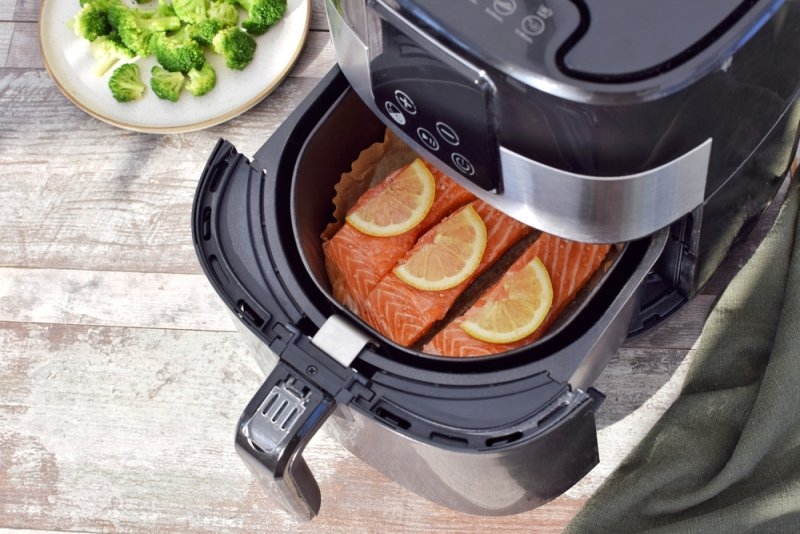
Air fryer salmon is honestly one of the easiest ways to get those crispy edges and tender flakes—no need to heat up your whole oven. It’s simple, but the details matter. If the skin’s wet, it won’t crisp. If you’ve got a thick piece, add a bit more time. Too much time and the fish turns dry fast. A touch of oil and basic seasoning really goes a long way for a solid weeknight dinner.
You can keep it classic or mix things up—garlic, paprika, lemon, and fresh herbs. All work great. In this blog, you’ll get a straightforward air fryer salmon recipe, the right temps and timing, how to prep, and how to turn out crispy skin with a tender middle.
This air fryer salmon recipe serves two people and uses everyday ingredients for a balanced, savory finish.
Prep time 5 minutes · Cook time 7–12 minutes · Serves 2
Use an air fryer basket, paper towels, a small bowl, and an instant-read food thermometer. Check the fillets for pin bones, then pat them thoroughly dry, especially on the skin side.
Mix the oil with garlic powder, paprika, salt, pepper, and parsley. Rub the mixture over the flesh and lightly coat the skin with oil. Do not soak the fish in seasoning. A thin, even layer works better.
Also Read: How to Make Creamy Chicken Noodle Soup: Step-by-Step Guide
The method is straightforward, but preheating and arranging the fillets correctly help them cook evenly.
The exact air fryer salmon cooking time will vary. Check early rather than relying on the clock alone.
Temperature and thickness determine whether the outside browns before the inside dries out.
For most fresh fillets, 400°F is a useful starting point. It encourages browning without requiring a long cooking period. If your air fryer runs hot or the fillets are particularly thin, try 375°F and begin checking earlier.
The right air fryer salmon temperature also depends on whether the fish has skin and how thick each piece is. Do not allow the temperature to fluctuate while cooking, and check the temperature of the whole product, not just its color.
Use this table as a starting estimate for fresh, thawed salmon cooked at 400°F.
| Fillet thickness | Approximate cooking time |
|---|---|
| ½ inch | 5–7 minutes |
| 1 inch | 7–10 minutes |
| 1½ inches | 10–12 minutes |
| Very thick fillet | 12 minutes or longer |
These times are estimates, not guarantees. Basket design, starting temperature, and fillet shape affect the result. For food safety, check that the thickest portion reaches 145°F.
Don't Miss: Smoked Tri Tip Roast Recipe for Super Juicy & Tender Beef
A crisp surface comes from removing moisture and allowing the fish to cook without unnecessary handling.
To get crispy air fryer salmon, try to have dry skin and very little oil on the fish. Displace the fillets in the basket, ensuring you don't overcrowd, and don't automatically open the basket again and again. Each interruption releases heat and makes timing less predictable.
The flesh can still turn dry if the fillet is thin or the cooking time is too long. Check early, especially when cooking different-sized pieces together. If crispier skin is the priority, finish with a short additional cooking interval while watching the fish closely.
Choose fillets of similar thickness so they finish at roughly the same time. Avoid cutting into the fish repeatedly to check doneness; use a thermometer instead. A light oil coating helps retain a pleasant texture, although it cannot prevent overcooking.
Also, do not leave cooked salmon sitting in the hot basket. Transfer it to a plate once it is done. The remaining heat can continue cooking the center.
Once the basic method works, changing the seasoning is an easy way to make the meal feel different without changing the cooking process.
Serve with roasted asparagus, rice, potatoes, or a simple green salad. The fish is rich enough that a fresh, acidic side often works best.
Suggested Reading: Quick and Easy Honey Lime Shrimp with Citrus Marinade
This dish barely needs prep and cooks fast. You can go with just garlic or use a sweet paprika glaze. Just dry the skin, coat with a bit of oil, don’t crowd the air fryer basket, and check the thickest part before the fish overcooks. Start at 400°F, but you may need to adjust for the size of your fillets or how hot your air fryer runs.
Once you’ve got the basics down, this recipe’s easy to repeat. Serve it hot with lemon and whatever sides you like. You get those crisp edges and tender fish every time—a reliable, homemade meal.
Yes! Start it at a moderate temp until the fillets soften, then season and finish cooking. It takes a bit longer, so check the thickest part—when it hits 145°F, you’re good.
No, leave it on. The skin keeps the fillet together and crisps up if you dry it right. You can always peel it off after cooking if you want.
Sure—use about 300°F for a few minutes and check often. Cover the fish loosely or add a splash of moisture to help keep it tender.
Pop it in a container and refrigerate within two hours. Eat it within three or four days. Reheat or just toss it cold into a salad.
Try rice, roasted veggies, couscous, or a crunchy salad. A lemon dressing or a simple yogurt sauce adds a fresh kick without drowning out the flavor.
This content was created by AI